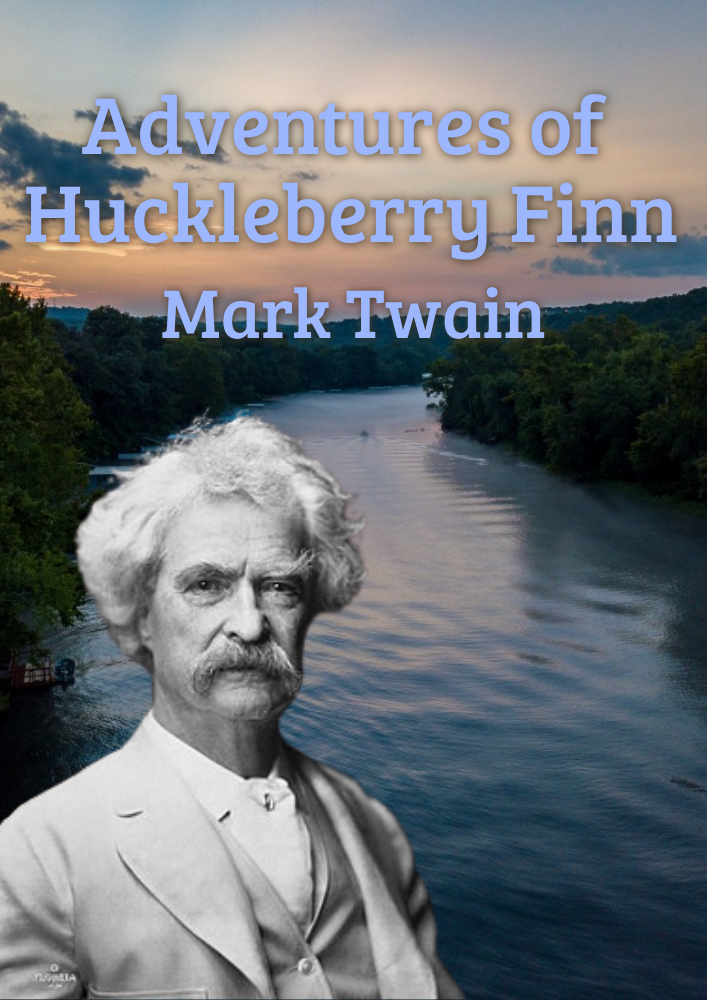
Work Background:
Adventures of Huckleberry Finn, by Mark Twain, first appeared in 1884–1885. Twain returned to the Mississippi material of Tom Sawyer but replaced its more external boyhood comedy with Huck's morally unstable first-person account. The novel's vernacular voice and confrontation with slavery are foundational to debates about American literary form, race, censorship, and classroom reading. Huck's vernacular first-person voice exposes the gap between inherited social rules and moral perception. Readers should expect historically situated racist language that editions may contextualize but should not silently modernize. This context explains the work's choice of voice, structure, and genre, while helping readers recognize the literary setting and social institutions surrounding its first publication or performance. Readers may notice how public rules enter private judgment, how repeated images change meaning, and how form controls what can be known at each stage.
Story Overview:
Huck escapes an abusive home and travels down the Mississippi with Jim, an enslaved man seeking freedom. Their raft journey repeatedly brings them into contact with feuds, frauds, violence, and social rules that force Huck to test received morality against lived loyalty. This summary identifies only the central situation and direction without revealing the ending. As speakers, settings, scale, or social positions change, earlier events take on new meanings; the work's effect lies not only in its incidents but also in pacing, point of view, silence, and the distance between what characters understand and what readers can infer.
Director: Richard Thorpe
Production country: United States
Principal cast: Mickey Rooney, Walter Connolly, William Frawley, and Rex Ingram
Difference from the book: The studio version compresses the river journey and reshapes episodes around Rooney's youthful star persona, reducing the novel's digressive satire.
Director: Stephen Sommers
Production country: United States
Principal cast: Elijah Wood, Courtney B. Vance, Robbie Coltrane, and Jason Robards
Difference from the book: The film selects a streamlined pursuit narrative from the episodic novel and foregrounds Huck and Jim's bond while omitting or combining later comic episodes.
The selected full text is the verified digital edition numbered 76. Market titles include: Adventures of Huckleberry Finn; The Adventures of Huckleberry Finn; Huckleberry Finn; Huck Finn; Adventures of Huckleberry Finn (Chinese edition). When choosing an edition, distinguish complete, abridged, annotated, modernized, and collected versions, and verify the translator, publisher, and year for each.
The novel's vernacular voice and confrontation with slavery are foundational to debates about American literary form, race, censorship, and classroom reading. Twain returned to the Mississippi material of Tom Sawyer but replaced its more external boyhood comedy with Huck's morally unstable first-person account. These qualities place the book at a specific point in the author's career and in the development of its genre. Its influence rests on recognizable questions of language, structure, history, and judgment rather than on a vague label of “classic.” Reading the full text beside another translation, stage production, or film reveals what later editors, translators, actors, and directors preserve, explain, compress, or rearrange, and brings out formal effects that summaries often conceal.
Reading another work from the same author's career also shows which concerns persist and which methods change. The book remains open to interpretation, disagreement, and rereading because readers can return to its actual language and arrangement instead of allowing later reputation to replace the experience of reading.
Miva: the next reading experience beyond audiobooks
Listen like an audiobook, then ask anything, anytime.
Start Miva's narrationMiva does not just narrate. It keeps explaining based on what you ask.