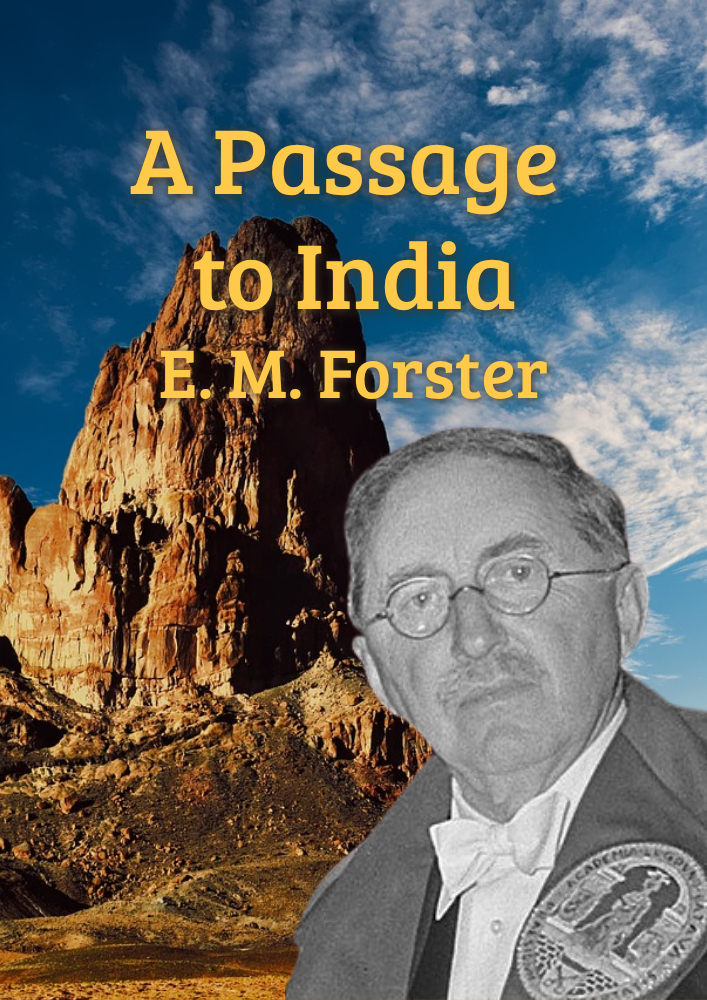
Background: Set in India under British colonial rule, where race, class, religion, and administrative power are deeply intertwined. Published at a time when the imperial order was still formidable, the novel acutely reveals the seemingly friendly but actually fragile relationship between the colonizer and the colonized. A Passage to India connects contexts such as colonial India, English literature, postcolonialism, friendship, racial politics, and Forster. It does not treat the era as decorative background; instead, it allows social change, class pressure, post-war spirit, and the sense of the modern city to enter the characters' tones, choices, and silences. Readers can thus understand why this work resonated in its time and see the cultural issues it addresses.
Synopsis: Dr. Aziz, an Indian physician, and Cyril Fielding, a Briton, attempt to establish a friendship but are swept into misunderstanding, accusation, and political opposition due to an incident at the Marabar Caves. An experience that cannot be clearly explained causes personal emotions to be rapidly swallowed by the colonial system, forcing everyone to take sides. As the story progresses, A Passage to India relies not only on plot twists but also on character relationships, shifts in perspective, and the accumulation of scenes to build tension. Readers follow the main characters into dilemmas of romance, travel, family, socializing, or spiritual exploration, gradually seeing how surface order is driven by desire, memory, duty, and misunderstanding. Core plots are preserved here, while avoiding spoilers for the critical ending.
Literary Features: Readers can understand how Forster maps friendship, misinterpretation, and imperial power onto the same landscape. It also reminds us that goodwill often fractures under fear and prejudice if unsupported by an equal system. In terms of literary features, A Passage to India is noteworthy not for an abstract "classic" status, but for how it uses narrative rhythm, symbolic imagery, character voices, and structural arrangement to make loneliness, disillusionment, or spiritual crisis a palpable reading experience. It is also suitable for reading alongside other Modernist, Jazz Age, and post-war literature to observe how different writers handle the individual in a fragmented era.
Encyclopedia
Author's Life: E. M. Forster (1879–1970) was an English novelist, essayist, and critic whose works excel at depicting the conflict between class, freedom, emotional honesty, and institutional oppression. His novels often begin with seemingly detailed social settings and gradually reveal how empire, gender, class, and moral codes limit genuine connection between people. Forster's style is clear and gentle, yet his thoughts are quite sharp, emphasizing the vulnerable position of individual conscience and private relationships within the vast social machine. His work belongs not only to the entries of great masters in literary history but is also frequently reread in university courses, book clubs, and cross-cultural discussions; the narrative forms, character psychology, and temporal observations in his work still provide a valid entry point for understanding modern life.
Relationship Between Author and Work: That E. M. Forster was able to write A Passage to India is closely related to his era, creative concerns, and literary ambitions. This work concentrates the issues the author long focused on—colonial India, English literature, postcolonialism, friendship, racial politics, and Forster—and transforms them into a readable experience through specific characters and narrative forms. It is not a simple projection of the author's life, but the result of the author combining personal observation, the pressures of the times, and formal experimentation. Therefore, when reading this book, it is best to pay attention to both the author's background and how the text reforges that background into literary form.
Miva: the next reading experience beyond audiobooks
Listen like an audiobook, then ask anything, anytime.
Start Miva's narrationMiva does not just narrate. It keeps explaining based on what you ask.