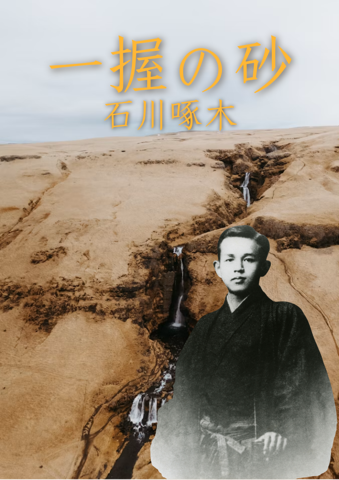
Background: The visual format of writing a single poem across three lines and the poetic style of translating everyday emotions into plain language are crucial. Since this work is a five-part poetry collection rather than a narrative, it should be read while maintaining the original table of contents and arrangement. Understanding the era of its creation and the timeline of its publication makes it easier to see what the narratives and expressions were responding to. Alternative titles found by readers should remain auxiliary information, and the standard title of the collected text should be used consistently throughout.
Content: Hometown, family, life in Tokyo, work, illness, poverty, and perspectives on society emerge as a sequence of tanka. The immediacy of individual poems and the repetition of emotions throughout the chapters form the core of the reading experience. Rather than detailed endings or character lists, this serves as an entry point for reading the development and form of the text. The gap between what the narrator knows and what the reader can infer, as well as temporal changes due to the arrangement of chapters and poems, also provide clues for interpretation.
Literary Features: The layout of dividing one poem into three lines carves hesitation, breathing, and movement of the gaze onto the page. While singing of hometown, family, work, and poverty with simple vocabulary, the five-part arrangement expands personal memory into social time. By confirming the tone, pauses, and repetitions that disappear in a mere summary, the unique flavor of the work becomes clearer.
Work Encyclopedia
Author's Life: Ishikawa Takuboku (1886–1912) was a tanka poet, poet, and critic from Iwate Prefecture; his real name was Ishikawa Hajime. He appeared on the poetic scene at a young age and, after working for newspapers in various parts of Hokkaido, continued writing in Tokyo. He translated the hardships of life, feelings for his family, distance from his hometown, urban labor, and social issues into tanka with a simple colloquial sensibility and sharp self-observation. His representative collections include "A Handful of Sand" and "Sad Toys." He is known for opening tanka to a visual rhythm close to a diary or monologue by using a three-line typography instead of the traditional single line per poem.
Relationship between Author and Work: Takuboku translated the urgency of life and memory into tanka, designing breathing and gaze through the three-line arrangement. This book is not merely a document explaining the author's poverty, but a collection that edits his own self-image.
Media Comparison (Last 10 Years): While not a direct adaptation, it can be read thematically alongside the Netflix film "Asakusa Kid" (2021). Both deal with the poverty and self-consciousness of young people honing their craft in the city, though this book consists of fragments of three-line tanka, while the film is a biographical drama centered on a master-disciple relationship. When comparing, specify titles and years, and if it is not a direct adaptation, state that it is a thematic comparison while highlighting the differences in focus due to medium and era.
Publisher
BookAI
Published
2026-09-16
Miva: the next reading experience beyond audiobooks
Listen like an audiobook, then ask anything, anytime.