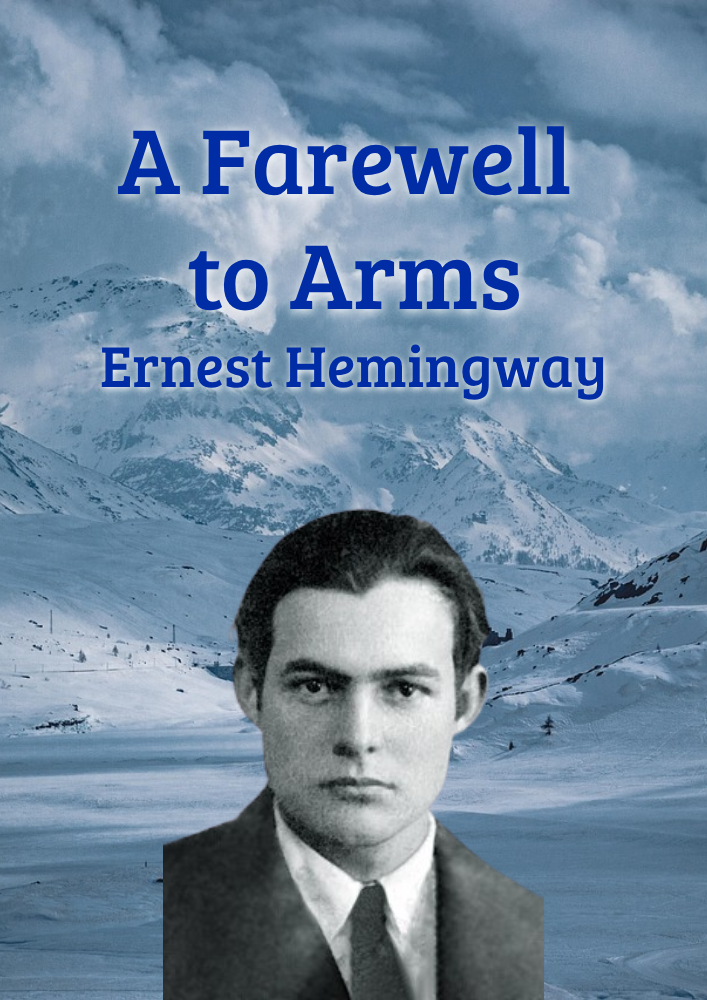
Background: After World War I, Europe remained haunted by memories of trenches, hospitals, and exile routes. This novel renders the Italian front, ambulance corps, and the escape to Switzerland as a cold emotional thread, making war no longer just a historical event but a daily shadow permeating the body, language, and love. The emergence of A Farewell to Arms connects contexts such as war literature, the Lost Generation, romance, Hemingway, WWI, and modernism. It does not treat the era as decorative background; instead, it allows social changes, class pressures, post-war spirits, and modern urbanity to enter the characters' tones, choices, and silences. Readers can thus understand why this work resonated in its time and see the cultural questions it addresses.
Synopsis: American ambulance lieutenant Frederic Henry meets British nurse Catherine Barkley on the battlefield. The two fall in love amidst gunfire, illness, and retreat, attempting to use private intimacy to resist public disaster, but war and fate are always closing in. The story presents the brevity of love, the exhaustion of courage, and the weight of loss through concise narrative. As the story progresses, A Farewell to Arms relies not only on plot twists but also on character relationships, shifts in perspective, and the accumulation of scenes to create tension. Readers follow the main characters into dilemmas of romance, travel, family, socializing, or spiritual exploration, gradually seeing how surface order is pulled by desire, memory, responsibility, and misunderstanding. Core plots are preserved here, while avoiding premature disclosure of the most critical ending impact.
Literary Features: Readers can see how Hemingway uses restrained language to bear immense emotion and understand the Lost Generation's skepticism toward slogans of glory. It is suitable for contemplating war literature, masculine silence, escape within love, and how modern fiction preserves deep trauma with minimal sentences. Regarding literary features, what is noteworthy about A Farewell to Arms is not its abstract "classic" status, but how it utilizes narrative rhythm, symbolic imagery, character voices, and structural arrangements to make loneliness, disillusionment, or spiritual crisis a tangible reading experience. It is also suitable for reading alongside other modernist, Jazz Age, and post-war literary works to observe how different writers handle the individual in a broken era.
Work Encyclopedia
Author Biography: Ernest Hemingway (1899–1961) was one of the most representative American novelists of the 20th century, also serving as a journalist and war correspondent. He is famous for his concise, restrained style and precise dialogue, often called a practitioner of the "Iceberg Theory": the colder the surface text, the deeper the trauma, desire, and loss beneath. His works repeatedly explore war, hunting, travel, male dignity, broken love, and spiritual burnout, profoundly shaping the literary image of the Lost Generation. He was awarded the Nobel Prize in Literature in 1954. His creation belongs not only to the entries of famous masters in literary history but is also frequently revisited in university courses, book clubs, and cross-cultural discussions; the narrative forms, character psychology, and observations of the era in his works still provide effective entry points for understanding modern life.
Relationship Between Author and Work: The reason Ernest Hemingway was able to write A Farewell to Arms is closely related to his era, creative concerns, and literary ambitions. This work concentrates the author's long-term interests in war literature, the Lost Generation, romance, and modernism, transforming them into readable experiences through specific characters and narrative forms. It is not a simple projection of the author's life but the result of combining personal observation, era pressures, and formal experimentation. Therefore, when reading this book, it is best to simultaneously note the author's life background and how the text reforges that background into literary form.
Film and Television Comparisons of the Last Decade: In 2024, plans for a new adaptation directed by Michael Winterbottom and starring Tom Blyth were reported; if compared with recently completed works, Edward Berger's All Quiet on the Western Front (2022) similarly portrays WWI as the attrition of body and faith. The difference is that All Quiet on the Western Front emphasizes the collective fate of soldiers and the war machine, while A Farewell to Arms focuses more on love, retreat, and the silence of survivors. This comparison helps readers distinguish the original work's literary focus and how visual media reinterprets rhythm, visuals, character focus, and contemporary issues, placing the classic back into today's viewing experience.
Miva: the next reading experience beyond audiobooks
Listen like an audiobook, then ask anything, anytime.
Start Miva's narrationMiva does not just narrate. It keeps explaining based on what you ask.